

What would you do if you didn’t have a personal automobile to get around Spokane? Would you need to get a different job? Shop at a different grocery store? Could you make it to school or church? Could you get your kids to daycare or school? How would you get to a show at the Spokane Comedy Club or to brunch at Frank’s Diner?
For many of us, we’re privileged enough to not have to worry about such concerns, but for the approximately 30% of Washington residents who do not drive, these are daily considerations they must make for every aspect of their lives outside of their homes.
There are numerous reasons why someone might be a nondriver, whether it’s due to age, disability, cost or merely because they do not want to drive. Yet, our transportation system is planned, funded and constructed by drivers, for drivers.
It is extremely rare to find an elected official who does not drive as their primary (or only) form of transportation. It’s one result of over a century of car-first transportation planning, it is next to impossible to run for most elected positions without the use of a personal automobile. Those who primarily walk, bike or bus are at a distinct disadvantage when it comes to attending public meetings, canvassing and fundraising.
The Week Without Driving (September 29 through October 5) was started in 2021 right here in Washington by Anna Zivarts, Director of the Disability Mobility Initiative at Disability Rights Washington, and author of When Driving Is Not an Option.
Anna created the Week Without Driving experience so those who have the option to drive can learn firsthand about the barriers and challenges nondrivers face and to encourage elected officials to work with nondrivers to create more accessible communities for all. Since then, the event has grown substantially, with America Walks partnering with Disability Rights Washington to take the week national.
As transportation advocates, we have seen firsthand how viewing transportation policy solely through the eyes of drivers can negatively impact the decision-making of our elected officials. That’s not necessarily a knock on those officials — as drivers themselves, they’re operating with their lived experiences.
But some of the things we’ve seen and heard from elected officials would be comical if they weren’t so important to the lives of Spokane area residents and visitors: STA board members wondering where they would park if board meetings moved to the STA Plaza to be better accessible to the public (board members receive free transit passes and free parking under the STA Plaza), Spokane City Council members proposing STA abandon buses in favor of private contracts with Uber and STA board members arguing reduced fares for low-income riders would turn the buses into “mobile homeless shelters.” These talking points are common misconceptions touted by people who do not ride public transportation, particularly politicians who seek to defund transit.
30% of the population is a huge chunk to leave out of consideration when making billion dollar decisions.
Somewhat counterintuitively, when a transportation system focuses improvements on the experience of nondrivers, we make life better for everyone, including drivers. For example, cities that prioritize safety for persons outside of cars see decreases in all types of serious injuries, including those traveling inside cars. Additionally, public transit significantly reduces traffic congestion. Finally, for every dollar spent on public transportation, regions receive a $5 economic return.
The Week Without Driving is a challenge, but it is also an opportunity. It is an opportunity for all of us to better understand the transportation system we take for granted. It is an opportunity for drivers to understand the challenges and dangers faced by children walking to school and retirees getting to appointments without driving. It is an opportunity for the transit-curious to enjoy the phenomenal system operated by Spokane Transit Authority. And it is an opportunity for Spokane residents to become advocates for their neighbors and communities.
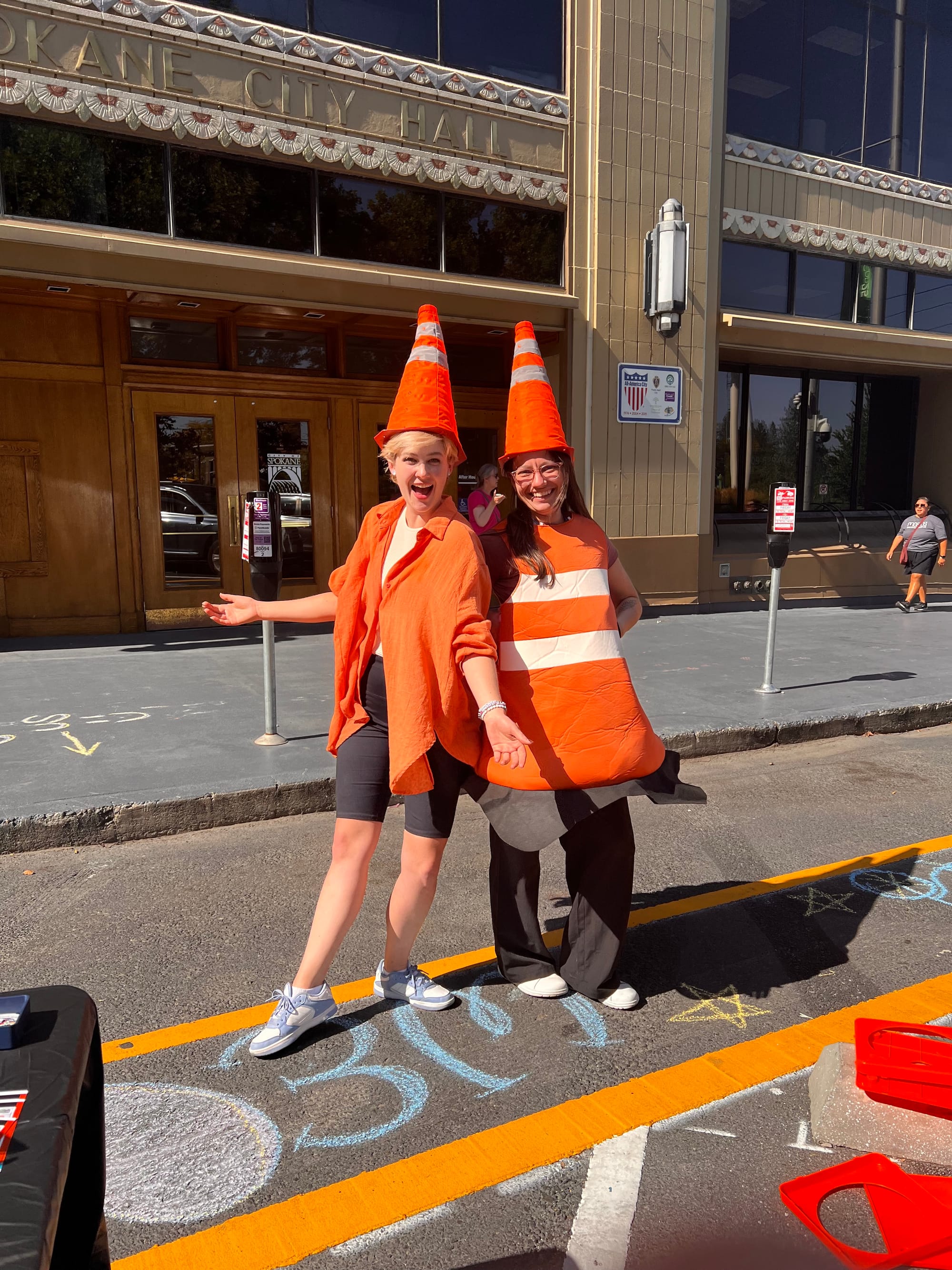
We encourage you to think critically about what you see when outside of a personal automobile. Are the sidewalks in your neighborhood uneven and crumbling? Are drivers failing to yield when you attempt to cross the street? Does a bike lane mysteriously end with no warning? Does your bus stop need seating, a shelter, or a trash can?
These conditions are not permanent. You can have an incredible impact on your community by taking note of subpar situations and contacting those in charge to demand change. Attend city council meetings and testify about your experience during Week Without Driving. Write emails to the STA board detailing the conditions at your local bus stop.
You can also join Spokane Reimagined. We are a nonpartisan, grassroots group dedicated to remaking Spokane’s transportation system. Powered by volunteers with passion for a vision of what Spokane can be, we advocate for safer streets for all users and for increased public transit investment. We have also been working on a major project in secret that we plan to roll out next week to celebrate Week Without Driving.
We love our city and are dedicated to making it the best possible version of itself, for all residents. In Spokane we all belong.
You can also join Spokane Reimagined for two events as part of the Week Without Driving programming:
- Wednesday, October 1st at 6 pm at Lunarium: A lively conversation around bike commuting, led by Gonzaga professor Scott Starbuck.
- Saturday, October 4th at 11 AM, in front of Made with Love Bakery: A Spokane Trolley Walking Tour with Gonzaga professor Linda Tredennick.
Spokane City Council Members share their thoughts on Week Without Driving:
District 3 Council Member Kitty Klitzke
District 2 Council Member Paul Dillon


