

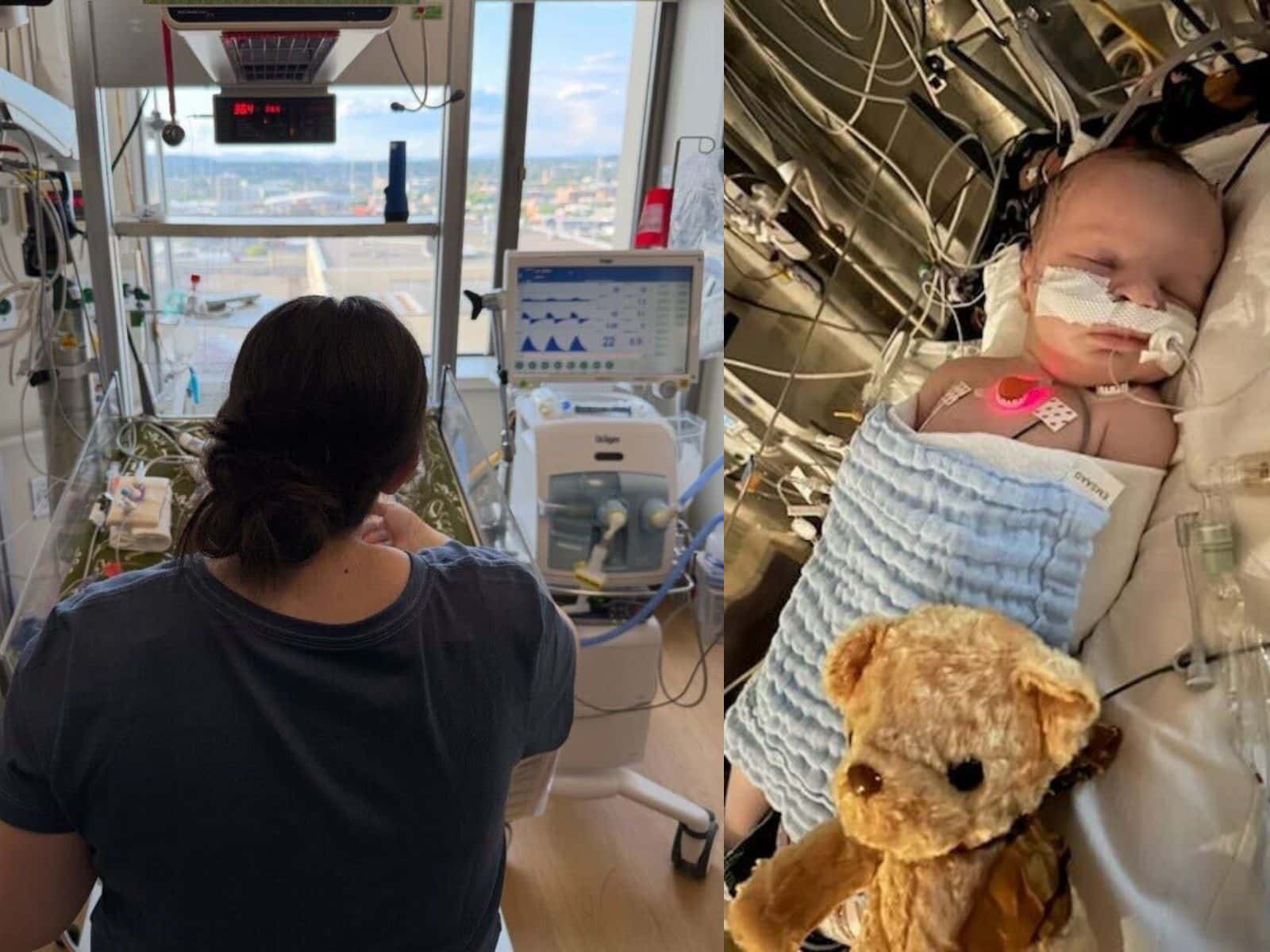
The day after bringing her newborn son home from the hospital, Spokane resident Maria Teter experienced every new parent’s biggest fear: the baby started having seizures. It was later determined that he had a grade-four brain bleed, a severe type of bleeding in infants that can cause serious complications.
After nine weeks in the Pediatric Intensive Care Unit, the nightmare deepened when, during a follow-up visit to Providence Sacred Heart Children's Hospital, he was exposed to measles in the hospital's pediatric unit.
“It was a heartbreaking feeling and a feeling of shock because, obviously, measles isn’t something you hear about very often,” Teter said.
Measles is a contagious disease that can cause pneumonia and brain swelling and can be fatal, especially to infants with health problems. It is preventable by vaccines and was once considered eliminated in the United States, but is coming back in some communities as people choose not to vaccinate themselves or their children. As of September 9, the CDC reported 1,454 cases in the United States this year.
That trend has come to Eastern Washington. On August 25, the Washington State Department of Health confirmed a measles case in Spokane County, the first since early 2024. Between August 12 to August 24, the Spokane Regional Health District reported four exposures to the disease, all at Providence Sacred Heart.
After a hospital employee called her to tell her about her son’s exposure, Teter described a “gut-wrenching” waiting game, while the family quarantined for four weeks and monitored themselves for symptoms, fearing what contracting the illness would mean for her son’s health. While Teter is vaccinated, her son is too young to get vaccinated, and because of that and his existing health conditions, his immune system is vulnerable.
While her son never contracted the disease, Teter said the experience has made her more fearful to bring him to his appointments, as the highly contagious nature of the disease made it harder to trust the community to keep her son safe.
Mark Springer, SRHD’s communicable disease program manager, said the confirmed case is a Spokane County resident who was exposed to an infected Idaho resident seeking care at Sacred Heart. Of the four following people who were exposed, three had contact with the Idaho resident and one with the Spokane County resident.
Dr. Mike Barsotti, chief administrative officer for Sacred Heart Children’s Hospital, said there are now no active measles cases in the hospital.
Highly contagious
For people who are not immunized, there is a 90% chance of contracting the airborne disease when exposed, Barsotti said. Due to the highly contagious nature of the disease, Barsotti said the hospital takes exposures seriously and takes precautions to minimize them. The hospital isolates infected patients in negative air flow rooms that prevent airborne spread of the illness, and hospital staff wear protective gear when interacting with patients in these rooms.
Barsotti said that people who think they or their children may have measles should let hospitals know so staff can provide proper care while minimizing exposure to others.
If a person is exposed, Barsotti said the hospital works in conjunction with SRHD to find and inform them to quarantine if necessary. Once notified of an exposure, Springer said SRHD follows up with exposed individuals, telling them what to do and what symptoms to watch out for.
For unvaccinated people exposed to measles, Barsotti said they can get the measles, mumps and rubella vaccine during the first 72 hours of their exposure, which should make them immune. If they miss that window, they should quarantine for 21 days from the time of exposure. Vaccinated people do not have to quarantine but should monitor for symptoms, Springer said.
Since measles symptoms are common to other respiratory illnesses, Springer said it is important to stay home if you have a fever, cough, runny nose or red eyes.
“[Staying home when ill] is a common sense way that we can protect other people, whether it’s COVID or it’s flu or it’s RSV or measles,” Springer said. “I think that little bit of responsibility to your community and to the people that you’re around is something to call attention to.”
Protect the community
The measles, mumps and rubella vaccination makes recipients 97% immune, SRHD Program Coordinator Kayla Myers said. It is recommended that children get their first dose between 12 and 15 months of age and their second dose between four and six years old. Adults can receive the second dose within two months of the initial vaccine.
Myers said it is important for people to check their vaccination records, which you can learn how to do here.
According to the Washington State Department of Health, 60.1% of four- to six-year-olds in Spokane County have completed the vaccination series as of 2024, well below the 95% coverage Myers said is necessary to have herd immunity and prevent measles from spreading.
Vaccine hesitancy has been growing steadily in the United States in recent years, often due to misinformation, meaning people are less likely than they have been historically to vaccinate themselves and their children.
Springer said vaccine hesitancy is often not “black or white” but a risk calculation. If individuals perceive a potential risk in receiving a vaccine and do not see measles as a prevalent threat, they may decide against getting vaccinated, which increases measles’ prevalence.
“As we’ve seen this year, across the county and certainly in our backyard, measles is not a theoretical possibility for most people,” Springer said. “It’s here in the country; there’s going to be periodic outbreaks.”
To increase vaccination rates, Myers said the SHRD runs campaigns to spread awareness on the safety and efficacy of the vaccine. It also connects with hesitant people to address their main concerns, which Myers said are usually based on anecdote rather than science.
“It’s always approaching it from the standpoint of: we understand it’s confusing, and we understand there’s a lot of competing information out there, and so, really, we’re just trying to make sure that we are always updating in a timely manner and creating resources that resonate with these hard-to-reach groups,” Myers said.
Certain immunocompromised groups are ineligible for the vaccine because the live-attenuated vaccine contains a small amount of weakened live virus, Myers said, so it’s even more important that eligible people get vaccinated to protect their community.
Teter echoed that getting vaccinated is a decision that will protect her son.
“For my son and his inability to be vaccinated yet — that’s out of our hands, and so we have to rely on other people to have that immunity for him and for kids like him who are too young or who have other medical conditions that are preventing them from being able to be protected on their own,” Teter said. “It’s really just up to those who are able to make that decision, to make that responsible decision.”


